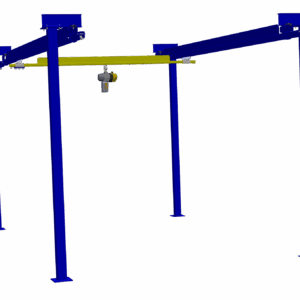
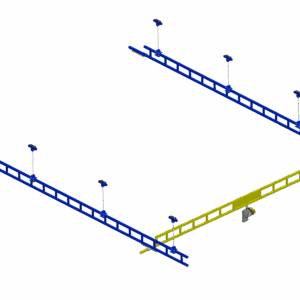
Single-girder cranes serve as versatile tools for a variety of lifting and transport tasks. When expertly engineered, these cranes not only boost daily output but also offer an optimized solution for environments where floor and overhead space are at a premium, yet a light-to-medium duty crane is essential.
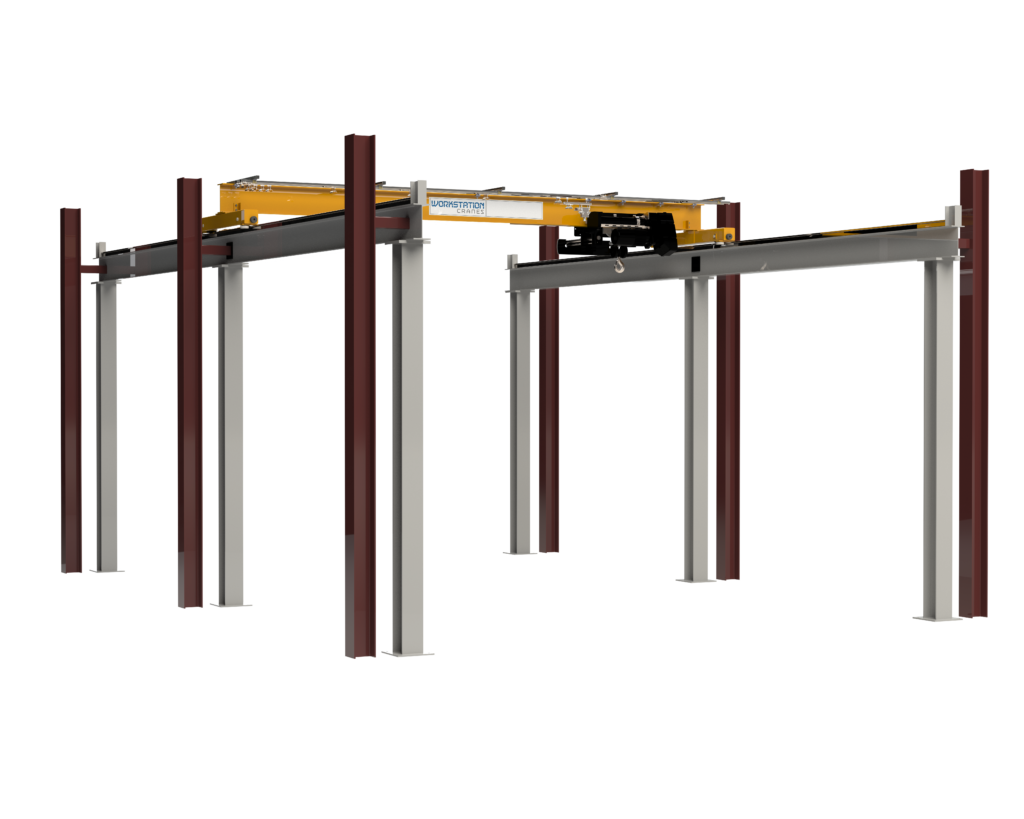
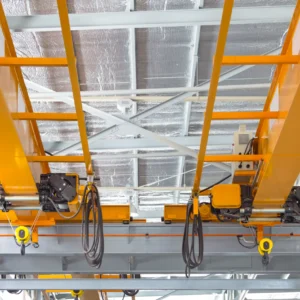
The architecture of a single-girder crane features a solitary beam, referred to as the bridge, which spans the width of the facility. Along this bridge glides a trolley, which precisely positions a hoist and hook mechanism. This setup enables the efficient elevation or descent of loads, further enhancing your operational capabilities.
Despite their limitations in capacity and span, single-girder cranes bring a host of advantages to the table, making them a go-to choice for a range of applications.
Additional Specs
One of their key benefits is the ease of integration into existing building structures, which translates into cost savings on the runway infrastructure. With a hoist trolley designed to operate underneath the runway, these cranes provide optimal end approach capabilities. Moreover, their low headroom design, particularly when paired with notched bridge beams, maximizes the utility of runway depth.
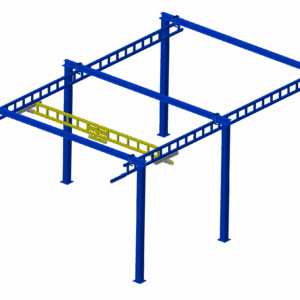
The structural design of a single-girder crane also allows for the creation of a freestanding workstation bridge crane system. This setup gains exceptional rigidity from the secure connections between columns and headers, as well as between headers and the runway. Additionally, the system offers the flexibility to interlock with another crane or monorail system.
When it comes to cost-effectiveness, single-girder bridge cranes stand out. Their simpler installation and maintenance requirements make them an economical choice. As these cranes feature a single bridge beam, they are more compact and lighter than their double-girder counterparts. This results in cost savings across the board—from materials and shipping to installation and ongoing upkeep.